


How Long Has It Cost You to Convince Your Skin That Pores Aren't
There is something that, whether it’s the sun in Medellín or simply noticing the first breakouts on the forehead, tells me my patient needs urgent help. It’s that moment in the office bathroom where they touch their nose and feel the rough texture. It’s not just a visual nuisance; it’s that sense of discomfort that prevents you from going to a party without heavy makeup, or the fear that when your partner sees you, your face will look like it’s full of holes. I promise you, I understand that frustration perfectly. It’s not just about aesthetics; it’s about how you feel about yourself when the mirror doesn’t show what you expected.
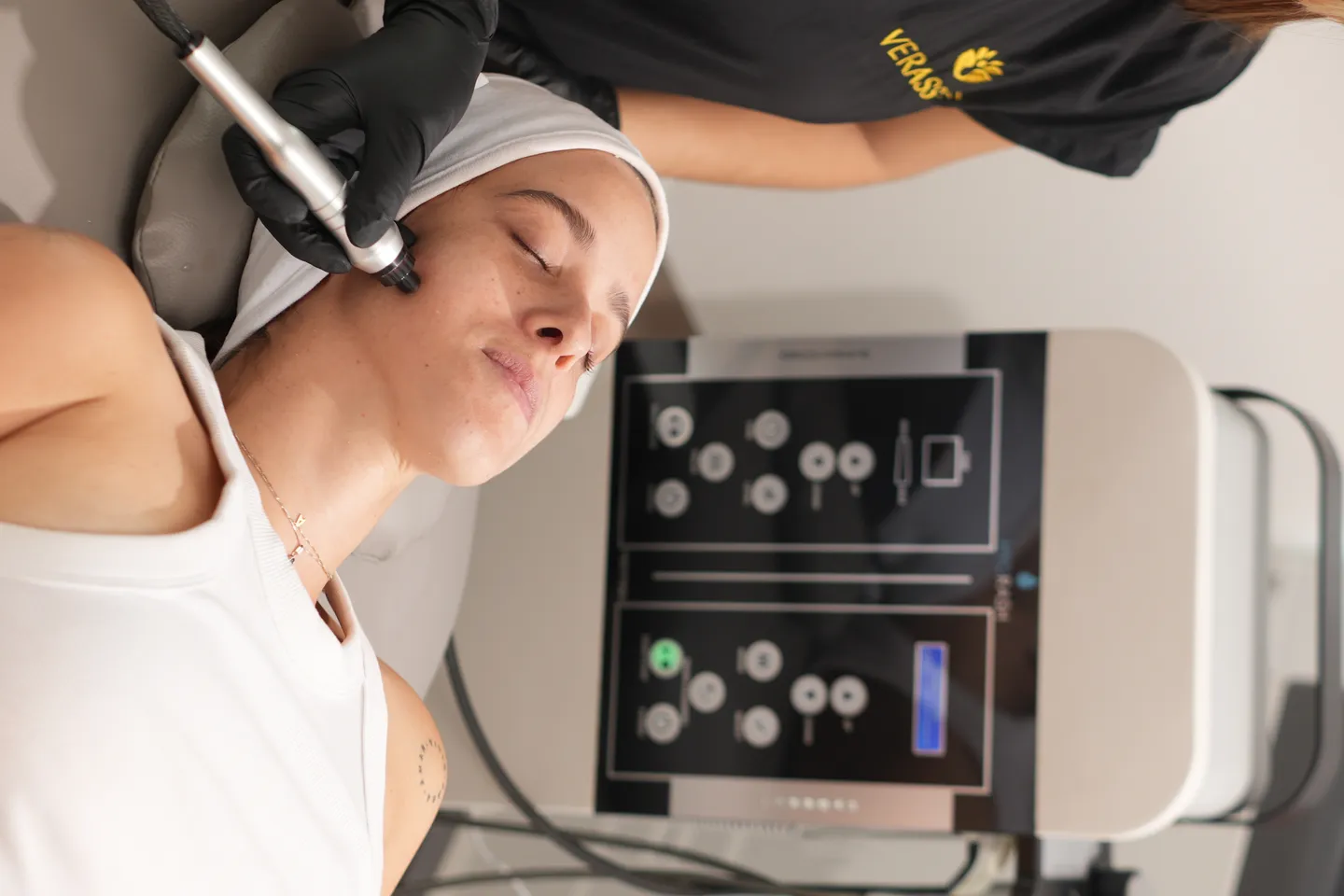
In consultation, we see many cases where the patient brings a face that looks like a topographic map with mountains and valleys marked by those dark, dilated spots. What we do is take a minute to validate that the skin has worked too hard, and we explain that pores are not a birth defect, but a real response to what your body is currently experiencing. Understanding this completely changes how you seek a solution, because it stops being a lost war against something hereditary and starts being a collaborative effort with your dermatologist.
The Truth About Dilated Pores: Why They Don’t Always Disappear Permanently
Many times people believe that melasma or severe acne goes away with a treatment. The reality is that it is controlled, not that it disappears forever. This is what happens with dilated pores. It is common to think that if they reduce today, they will never enlarge again. The myth is thinking that a single magic session fixes the skin architecture completely. The medical truth is more complex and honest: pores dilate when sebaceous glands work too much and the skin loses elasticity, causing the opening to widen like an arch.
What happens in your body has very specific causes that are not just “genetics.” The first real scientific cause is chronic hyperseborrhea, where glands produce an excessive amount of sebum over the long term. This excess fat, accumulated along with dead cells, forms a sticky mixture that pushes the pore walls outward, making it physically wider. It’s not that the hole breaks; it’s that the walls stretch and deform under the constant pressure of that fat.
The second important cause is the loss of collagen and elastin in the deep dermis. Over time, or due to the sun, that structural network that keeps the skin taut loosens. Imagine an elastic band that stretches too much and no longer returns to its original shape. This is why pores stay open even after washing the face well daily. The honest nuance here is vital: any treatment that promises to close them forever is usually misleading. What we really aim for is to shorten the stretching time and restore elasticity, but one must understand that it is a continuous maintenance process, not an instant and definitive cure.
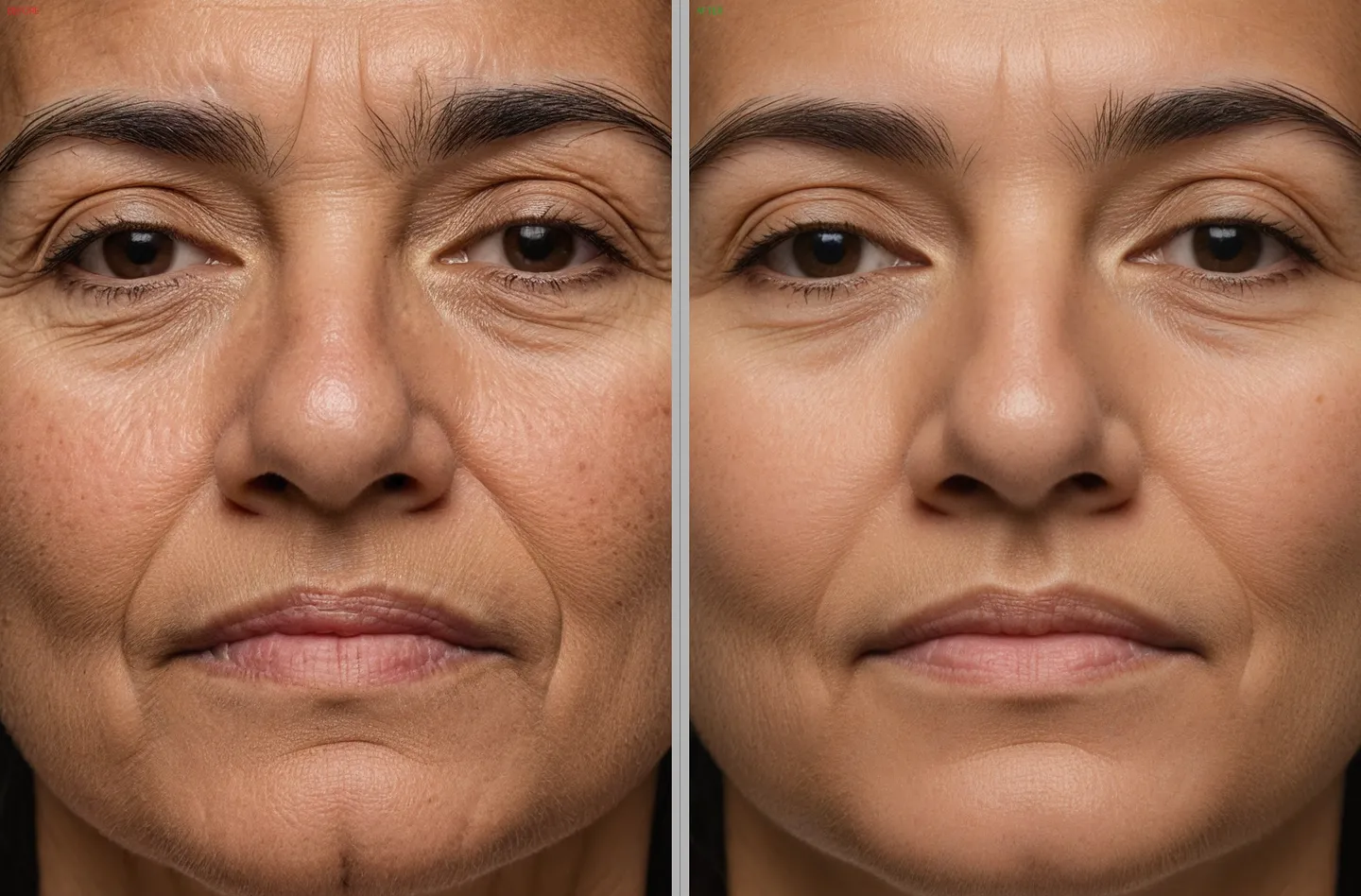
The Process in Consultation at Verassere: How We Reduce Those Visible Spots
When you arrive at our clinic in Medellín, we do not send you home with generic products and wait two weeks to see results. In reality, what we do is design a personalized plan that attacks the problem from two different fronts. First, we work on deeply cleaning the sebaceous ducts to eliminate that trapped fat that is keeping the pore stretched. This includes manual extractions and the use of high-concentration products that dissolve that oil and dead skin mixture without damaging the barrier.
Then, depending on your skin type and the severity of the case, we apply specific technologies to restructure the tissue. Some patients come directly to our fractional CO2 laser team, which is very powerful because it creates controlled micro-injuries that stimulate a new production of collagen. Others may benefit more from our nanopore procedures or gentle chemical peels if they need a less aggressive but equally effective approach. We also evaluate ideal cases for deep hydration with techniques like hydrash, which fill those empty spaces so light reflects more uniformly.
I mention this because I want you to know that you are not a machine where we apply a standard product. What we do is evaluate each area individually, as sometimes the forehead is very affected but the sides of the face are not. Verassere is the place where we unify these knowledge to offer you real options. If you feel lost among so many machines and technical names, here is the Verassere URL so you can see more details about our team, but the important thing is to come talk to us so we can formulate your exact strategy.
Clear Signs That Your Skin Needs Professional Intervention
You do not need to wait until the skin looks terrible or inflamed to seek help. There are concrete signs that indicate it is time to schedule an appointment before it gets worse. If you notice that pores seem especially visible at the end of the day, when the sunlight hits your face and highlights the imperfections, that is already a real warning sign. Your skin is giving signs of stress due to excess fat or inadequate hydration.
Another important indicator is when you apply your moisturizing creams and feel that they simply sit on the skin instead of being absorbed. If you notice that the texture feels rough or has small bumps to the touch, even if you don’t see a large lump, it is possible that the pores are compromised. Additionally, if you have tried to use strong acne products and only see that the skin gets more irritated without seeing improvement in the texture, it is a sign that you need a different approach than home care.
Let’s not alarm anyone here. Most dilated pores respond very well to a correct and timely treatment. The most important thing is not to let the problem worsen over time, as once the pore walls stretch too much, it is much more difficult to tighten them back without professional help.
Frequently Asked Questions About Your Routine and Treatment
How many sessions do I need for my pores to look smaller in reality? Most patients need between four and eight spaced sessions, but each one is different depending on their skin.
Can I use my normal moisturizer while undergoing laser or peel treatments? Yes, you can always use your moisturizer, but we must adjust the acid concentration so that the treated areas are not irritated more.
Will I be able to wear makeup if I just had a procedure at the clinic? It is better to wait at least 24 hours and for the skin to look calm before applying cosmetic products again.
Schedule Your Evaluation Today
If you have had this for months and want to know your options, schedule a consultation in Medellín: Schedule a consultation.