


Does IPL thin the skin or just lighten sun spots?
There is something many patients tell me when they come to my consultation in Medellín. They say the sun in our city seems to have no mercy, especially if you work outdoors in the northern zone or if you went on vacation to Santa Marta and didn’t return with the same tone. Then they see a photo of a light labeled “IPL” and think it’s a miracle. They ask if IPL thins the skin, as if it were a machine that also cleans and tightens. I understand that doubt because seeing that text on the internet sounds too good to be true. The reality is that this light does not replace aesthetic surgery or a lift, but it can change how your face looks if used with the correct purpose.
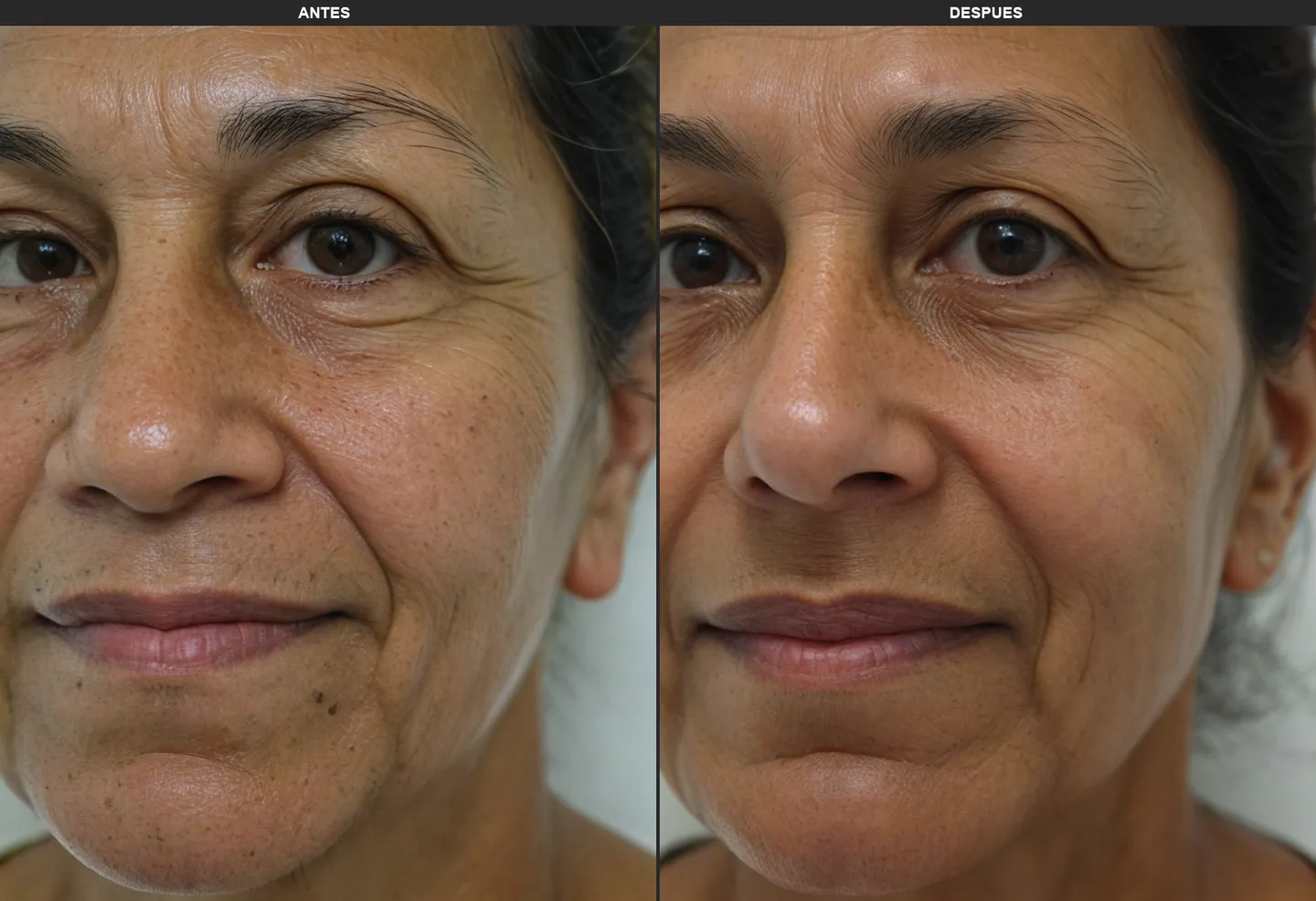
The first thing I must tell you is that IPL does not perform magic with the thickness of your skin. It is not a procedure to restructure collagen like a fractional laser could do in severe cases, nor is it a magical solution to thin the deep layers. IPL, which stands for Intense Pulsed Light, is a broad-spectrum light that focuses on energy absorbed by melanin. When that light touches your skin, the melanin acts as a shield and absorbs the energy, generating controlled heat that destroys damaged pigment cells. This causes those spots to become more transparent and integrate better with the rest of your natural tone. In short, you do not stretch the skin, but you can lighten areas where the sun has left lasting marks.
The real cause behind those spots
The sun spots you see on your cheek or forehead are not a casual defect of your genetic heritage. They are the direct result of cumulative damage from ultraviolet radiation over the years. That accumulated solar damage causes structural changes in the skin that go beyond coloration. Constant exposure breaks down elastic and collagen fibers, causing the skin to lose firmness and appear dull or with diffuse spots. Additionally, the chronic inflammation caused by the sun stimulates cells called keratinocytes to produce more melanina as a defense mechanism, creating those dark areas known as solar hyperpigmentation.
Here is an honest nuance that breaks many myths on the internet: people believe that IPL can eliminate those spots forever in one go. The reality is that they are controlled, not gone forever. If you continue to expose your skin to the sun without protection, the spots will reappear just as quickly as you removed them. The process is like trying to clean a dirty rug with hot water; if the rug remains damp and dirty on the inside, it will get dirty again. You need continuous treatment and daily protection for the results to last.
How we do it in our clinic
When we come to the clinic, we understand that not all types of spots respond equally to pulsed light. In my experience, we first evaluate the skin type and the intensity of the spots. If you have very fair skin and well-defined spots, IPL usually works very well because the light penetrates only where there is pigment. However, if your skin is darker or the spots are diffuse and old, sometimes we need to combine it with other methods such as chemical peels or specific pigment lasers that penetrate deeper.
In the consultation, we clearly explain what to expect. We do not promise instant results because the skin takes time to react. Generally, several spaced sessions are needed to see real changes in texture and color. If your case warrants it and you want to explore advanced options for a more complete renewal, you can view our entire catalog of treatments in our online store Verassere. There you will see the different machines and options we have for your skin type, but it is always better to decide with an in-person medical diagnosis.
Clear signs that you should see a specialist
Do not wait until the spots turn black or itching appears, although that would already be an advanced warning sign. The most common signs are when you notice changes in your skin color after spending a lot of time in the sun, especially in exposed areas like the face, hands, or arms. You might also be concerned if those spots have become darker or irregular in shape and size since you last saw them. Or perhaps you notice that the skin looks rough and shiny instead of having a uniform tone.
It is important to act before the damage becomes irreversible. Preventive dermatology is much easier and more effective than treating already established problems. If you feel that your spots are affecting your confidence or how you look in the mirror, a professional evaluation will give you the exact roadmap for your case.
Frequently asked questions
Can I use sunscreen if I am going to undergo pulsed light treatment? Yes, it is essential to use sunscreen every day to prevent spots from reappearing after the session.
How many sessions do I need to see differences in my sun spots? Most patients see significant changes after three or four regular sessions, depending on the intensity of the solar damage.
Can IPL remove a dark spot that looks like a dangerous lesion on my skin? No, if you see a very dark spot with irregular borders or one that changes shape quickly, you must come to the consultation first to rule out anything serious before applying any light.
What to do now?
If what you read has generated doubts in you about whether your case can be improved with this type of light, I am happy to answer them.