


Effective Keratosis Pilaris Treatment for Your Skin
It happens to you. You just got off work, take off your jacket, and touch your arms. You feel that irregular texture, those tiny bumps that seem embedded in the skin and don’t go away with a quick wash or a supermarket exfoliant. In those moments, frustration is real. You’ve tried everything you see on Instagram, but the skin still feels rough under your hands, as if it had an invisible layer of stuck-on sand. It’s not your fault or a lack of hygiene; it’s a real issue of keratin accumulation in hair follicles that causes small, rough bumps, common on arms and thighs.

When we arrive at the consultation, the first thing we do is examine that texture and understand what really bothers you. Sometimes the discomfort is just tactile, but other times the skin looks so bad it makes you feel uncomfortable in your own clothes. In our experience, we see that people think it’s a matter of genetic luck from the start, but it’s not as simple as that. What we do is evaluate if your symptoms change with the seasons or if there’s something else behind that roughness, such as a mild allergic reaction or extreme dryness from office air conditioning.
Why You Have That Rough Skin and What Myth You Should Stop Believing
The origin of this condition involves a protein called keratin. It’s the same one that protects your nails and hair tips, but on your skin, it appears when hair follicles don’t open well enough to release the hair. Imagine a small plug formed by that keratin getting trapped inside the follicle, creating a small, hard elevation. The skin forming around that plug has fewer nutrients and blood, making it drier and more visible.
Here is the honest nuance that everyone ignores: many people believe that melasma or keratosis pilaris goes away with a treatment and disappears forever. The reality is that it is controlled, not gone forever. It’s like having sensitive skin; with proper care, you keep it soft and beautiful, but if you expose it to the sun without protection or stop using moisturizing creams, it comes back. People expect a permanent miracle that doesn’t exist biologically, and that generates unnecessary anxiety.
In our dermatological team, we explain that this affects thousands of people in Colombia, especially in warm areas where the skin sweats more or in dry climates where dehydration happens quickly. People think it’s only a sun issue, but genetics play a big role in how your body processes that keratin. If your parents had that rough skin, it’s very likely you have it too because your genes dictate how your hair follicles function from childhood.
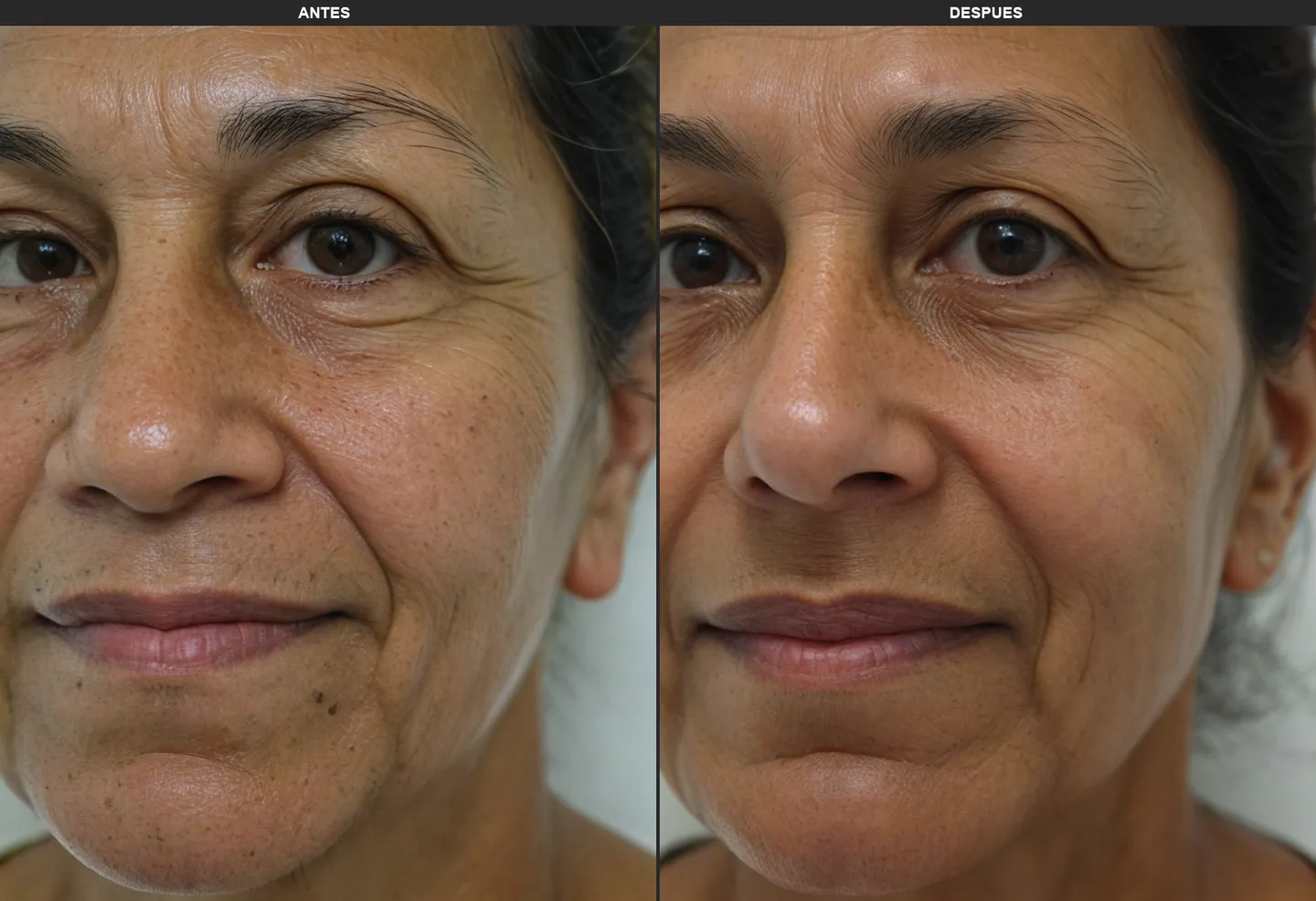
How We Approach Your Case in Consultation in Medellin
On the first visit, we don’t just give you a product and send you home. What we do is perform a visual evaluation to see if there is red inflammation or if it’s just that characteristic white roughness. Sometimes we see that there is an accompanying condition, such as a mild fungus or a contact dermatitis from a new soap you use at home. If we detect something like that, we treat that secondary cause first because if we don’t solve it, any moisturizing cream won’t help.
If we confirm it’s just keratosis pilaris, we design a long-term plan to soften that texture. We explain that gentle chemical exfoliants are the key, not physical scraping with sandpaper at home. We use formulas with salicylic acid or calcium lactate that open the follicle without damaging the skin barrier. In our store at Verassere, we have specific products for this type of skin that you can buy without a prescription, but always with prior supervision.
The process requires patience. Don’t expect results in one or two days. Keratin lasts a long time in the skin, so changes are progressive over several weeks of constant use. We teach you to apply the cream just when the skin is dry to maximize the penetration of the active ingredient. If you continue with the treatment, you’ll see that the skin becomes more uniform and the bumps less visible over time.
When Should You Seek Professional Help?
You should consider a visit to a dermatologist if you feel the roughness isn’t improving with basic hydration or home exfoliants. Also, come in if you notice the skin turning red, hot, or painful to the touch, which could indicate a secondary bacterial infection. If you have doubts about which product to use or if you have known allergies, it’s better to consult before buying something new online.
Other concrete signs include rapid changes in the size of the bumps or if you notice that the affected areas are spreading to other parts of the body like the thighs or chest. If you wear very tight clothing and feel additional irritation, it’s good that a professional sees you to rule out mechanical friction. You don’t need to alarm yourself, but you should be proactive with your daily care to prevent the condition from worsening.
Frequently Asked Questions About Your Skin
Why does that rough skin stay on my arms even when the sun goes down? Is it possible that I’m allergic to some soap I use in the shower? Does keratosis pilaris cure with one miracle cream?
Ready to Improve Your Skin Texture?
If you want an evaluation before deciding, write to us: Schedule a consultation.