


Real Solar Lentigines on Your Face and How to Treat Them
If you have been working under the sun of Santa Marta while finishing a project in Medellín, or perhaps you are traveling and resting on the beach, it is very likely that you will arrive tired and find that your cheeks have changed. It is not just a visual burn, but the skin has darker areas where it should be uniform. You feel that frustration of looking in the mirror and realizing that your daily effort has left a visible mark. It is annoying when clothes stick to the face or when you feel insecure during important meetings.

In consultation, we see that this does not happen by magic, but is the result of years of accumulated exposure. Your skin keeps a memory of every ray of sun it received, storing that information as extra pigment. Sometimes people believe that if they stop sun exposure, the spots will go away on their own. The reality is that those solar lentigines do not disappear with time if there is no action; they become harder and more difficult to treat. The damage is already done in the basal layer, and we need specific tools to target and lighten it.
What we do is evaluate what type of damage your face has before choosing a treatment path. There is much confusion because they mix melasma, which is hormonal, with real solar lentigines caused by the sun. If your skin has irregular brown or grayish areas that coincide with the way light hits your face, it is very likely that you are dealing with solar hyperpigmentation. This means that the melanocytes, the cells responsible for coloring the skin, have reacted excessively to oxidative damage.
Why Does This Happen and What Does Real Science Say?
Solar lentigines arise when the energy of ultraviolet radiation damages the DNA of skin cells. This alteration causes cells to continue producing melanin even after the sun has gone. The curious and painful part is that some spots can persist for years, not just because of pigment, but because that area has a different microstructure than its surroundings.
There is an important fact that few know: solar lentigines usually have irregular and diffuse borders, unlike melasma which tends to be more symmetrical and extensive. Additionally, although it may seem strange, sun exposure on cloudy days also contributes, as 80 percent of UV radiation reaches even with clouds. That explains why many people believe they did not burn and end up with spots after months without feeling pain.
An honest nuance that breaking myths is vital here. People believe that with sunscreen alone is enough to cure existing spots. The reality is that protection prevents new lesions, but does not eliminate old ones. To remove them we need active processes that destroy accumulated pigment or accelerate its renewal. If you only use a protector without treatment, you will see that the spots remain the same or even worsen over the years.
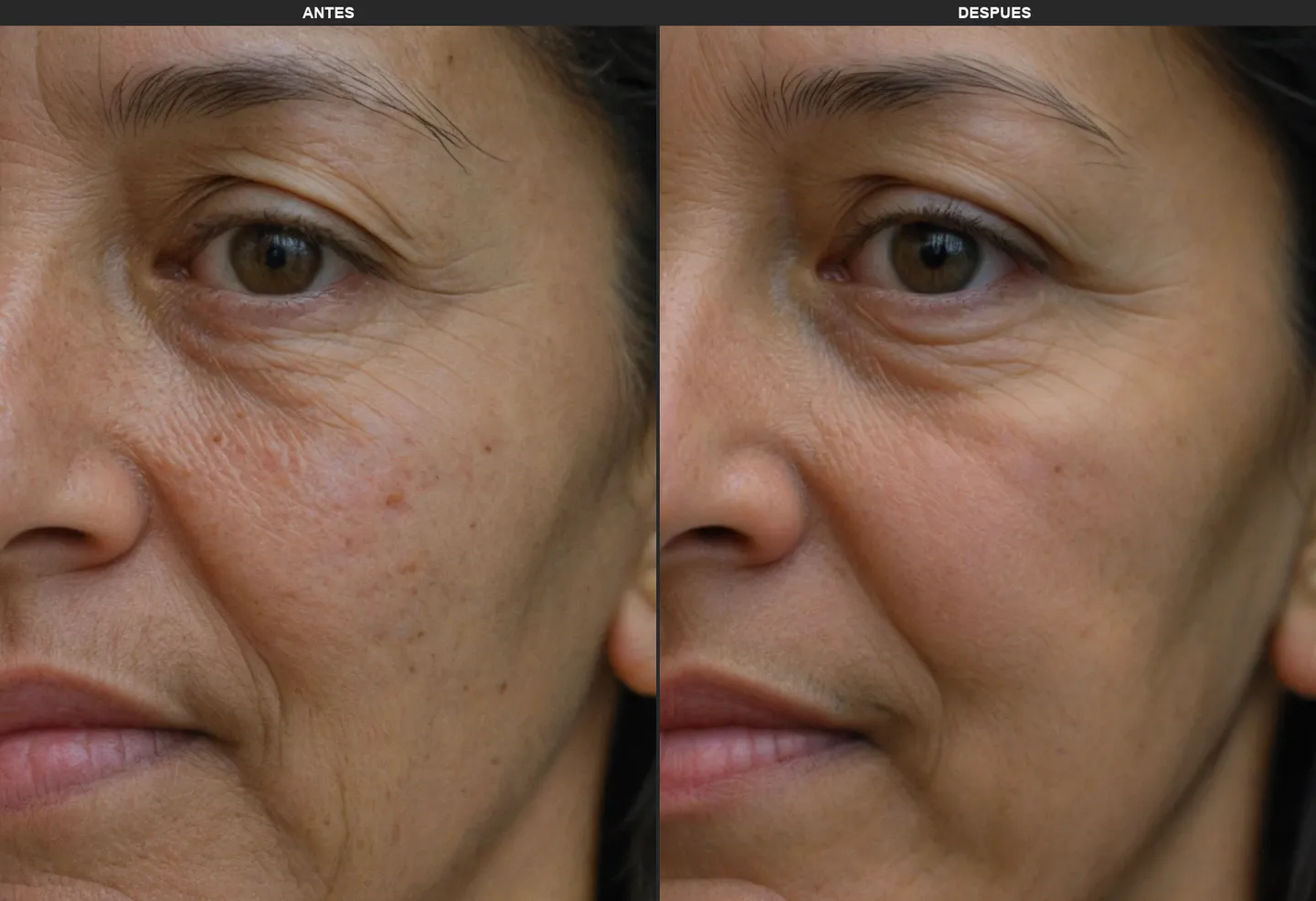
How Do We Solve This in Our Consultation?
In our team we have protocols to address your skin in a personalized way. We do not apply everything to everyone, but we adapt the intensity according to your skin type and tolerance. If you have more sensitive skin, we use gentle techniques that do not burn or inflame too much. If you need more energy for resistant areas, we increase the power while controlling very well each session.
What we do is combine several tools to obtain stable results. Pigment lasers are like a broom that sweeps away the dark color without damaging the healthy skin around. Chemical peels act as a deep exfoliation that removes pigmented cells from the inside out. IPL technology, or modulated intense pulsed light, is another option that selectively heats dark areas so they are destroyed.
If you have doubts about whether these options are suitable for you, we recommend visiting our online store to see the preventive care products that accompany these treatments. At Verassere you can find broad-spectrum sunscreens and creams with brightening agents that help keep the skin healthy during the process. Remember that daily care is just as important as the clinic session to prevent them from reappearing.
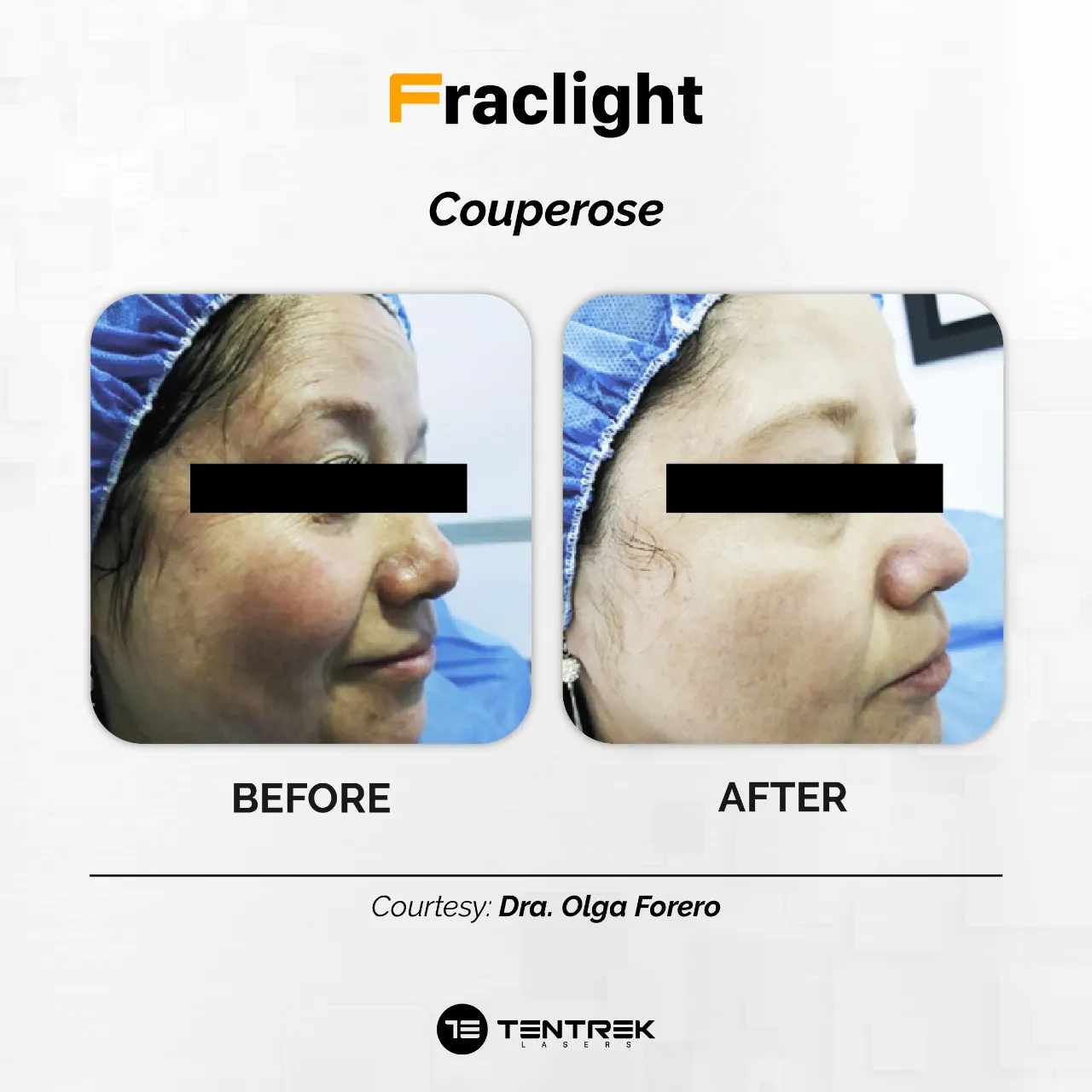
When Should You Seek Professional Help?
You should consider a dermatological evaluation if you notice progressive changes in the color of your face. If the spots are appearing in exposed areas such as the face, arms, or hands, and do not disappear with the change of season. It is also a good time to consult if you have a history of severe sunburns or if you notice that your spots change shape or size rapidly.
Do not wait until the skin turns red or painful, although that can happen with some treatments. If you simply see a color difference that bothers you or affects your confidence, it is worth getting it evaluated. An early visit allows choosing the least aggressive technique possible and obtaining faster results with fewer risks.
Frequently Asked Questions
Can solar lentigines be completely removed? Most solar lentigines improve significantly with appropriate treatments, although some pigments may require several sessions to achieve total uniformity.
Can I use these techniques if I have sensitive or reactive skin? Yes, we adapt the power of each technique to your tolerance to minimize discomfort and ensure safe results even on delicate skin.
Why do my spots not go away even if I use sunscreen all day? Sunscreen prevents spots from worsening or growing, but it does not eliminate existing pigment; active treatment is needed to lighten the skin.
Book Your Appointment Today
If you have had this for months and want to know your options, book a consultation in Medellín: Schedule a consultation.