


What is Colormax and Why Your Sun Spots Don't Disappear on Their Own

If you spent a weekend in Santa Marta or simply stayed under the Medellín sky for a long time without adequate protection, did anyone tell you that those brown spots are the fault of melasma? It is a very common confusion because both conditions color your skin, but the story behind each is totally different. Your skin is telling a story of accumulated burns, not just hormones or genetics.
When you see those dark areas appearing on the face, hands, or arms after strong sun exposure, what really happens is that your skin cells have responded to the damage with excess pigment production. Unlike melasma, which can sometimes be masked by creams, these solar spots are physical marks left by heat and radiation. People believe that a good sunscreen cream cures what is already done. The reality is that the sun damaged the skin months or years ago, and what you need now is a treatment to remove those damaged layers, not just prevent new burns.
In consultation, we see this frequently in frustrated patients who have applied protectors for years and the spots remain. The sun in Medellín has an intensity that many do not calculate, especially on cloudy days when UVA radiation penetrates the clouds without mercy. That radiation penetrates deeply and activates your melanocytes, the cells responsible for color, to produce more melanin as a defense mechanism. But that defense becomes permanent if the damage accumulates.
What we do in dermatology is not wait for them to disappear magically, but intervene with precise tools. When we detect these solar spots and hyperpigmentation from accumulated sun damage, we first evaluate the depth of each spot. Some are only on the surface, while others have reached deeper layers of the epidermis. Understanding this is key to choosing the right path without causing the skin to react negatively.

Understanding the Real Damage Behind the Spots
Many people confuse melasma with solar spots because both stain the face, but their origins are distinct. Melasma is usually a hormonal or genetic reaction, while what we call solar spots is a direct response to physical sun damage. If your skin has a history of unprotected sun exposure, solar spots are almost certainly the main cause.
A medical fact few know is that UVA radiation, which damages and ages the skin, can enter through windows with glass and through dense clouds. This means that even if you are inside the house or under cover on a gray afternoon, your skin is still receiving the necessary attack to generate pigment. Furthermore, sun damage not only darkens the skin; it alters the collagen structure, making the spots appear more marked and difficult to treat because your skin’s protective barrier is compromised.
Another important detail is time. Solar spots can take years to form from the first significant sun hit. That is why it is not uncommon to see them appear suddenly in someone young who always took care of themselves, because the damage accumulated silently over decades without the person noticing. The skin does not remember when the damage occurred; it only remembers how to react to it.
It is fundamental to distinguish this from melasma because the treatments are very different. Melasma often requires tyrosinase inhibitors and strict care to avoid worsening, while solar spots respond better to exfoliation processes and lasers that physically remove the affected layers. If we try to treat solar spots with formulas designed for melasma, we may fail to remove the color or even irritate the area more.
In our clinic, when we analyze your skin, we use devices that allow us to see by layers what type of pigment you have and where it comes from. This allows us to design a personalized plan that specifically targets those areas affected by the sun without damaging the rest of your face. It is an approach that distinguishes professional dermatology from those selling generic solutions online.
How We Work to Eliminate Those Spots in Consultation
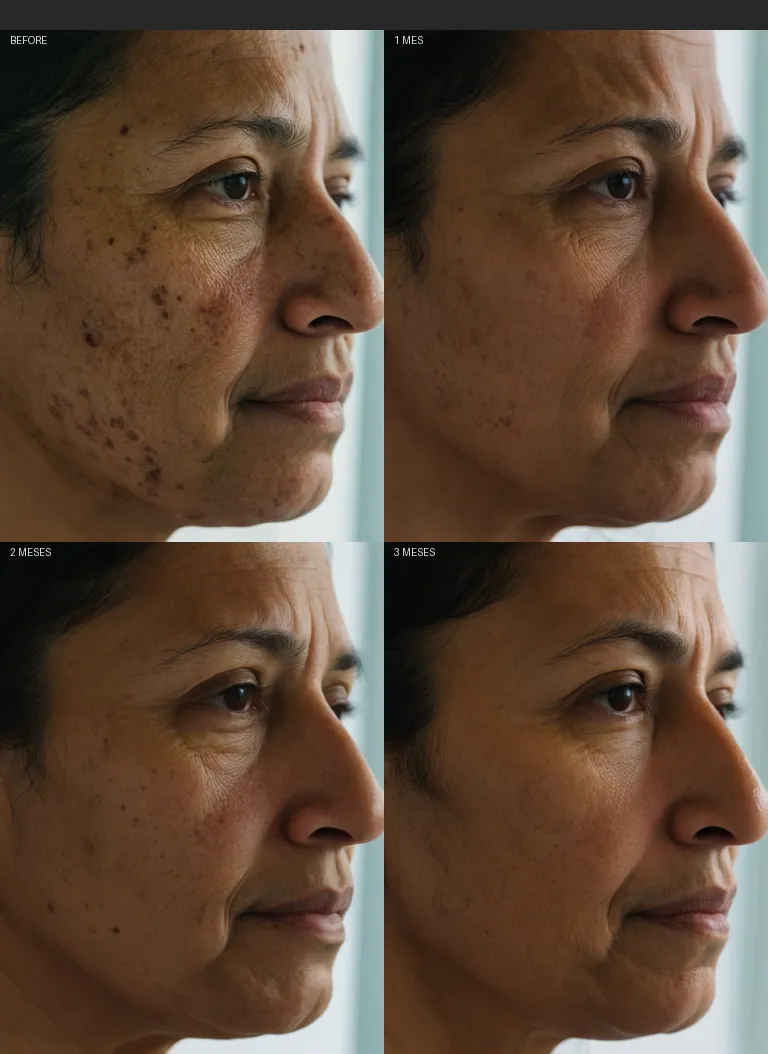
When you come to our consultation in Medellín, our goal is not just to tell you what to buy, but to create a map of your skin. The first thing we do is document all affected areas with photos and use technology to see the depth of each solar spot. Then, we define if the problem is superficial or deep, as that dictates which tools we will use to help you recover.
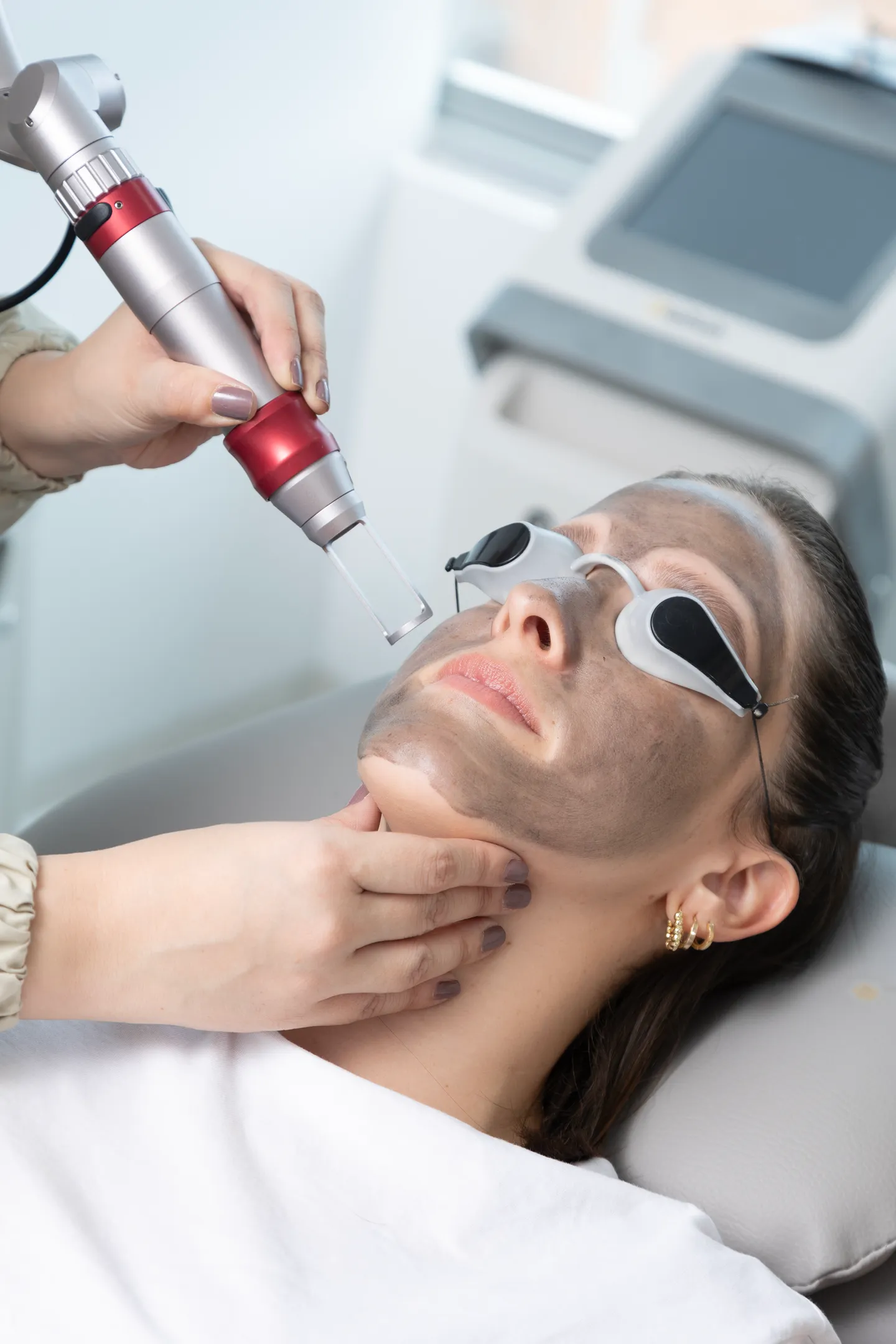
Our approach combines several methods depending on the severity of the case. If the spots are light and superficial, sometimes a controlled chemical peel is enough to renew the skin. For deeper cases where the spot has reached intermediate layers, pigment laser is our preferred option because it fragments excess melanin without damaging the epidermis. In complex or extensive cases, we use intensified pulsed light, which is like a laser beam that travels uniformly and safely across your entire face.
If you have doubts about which option is best for you, you can consult our online store where we find products that complement these treatments, such as Verassere. It is a place where you can find specific formulas to hydrate and protect your skin while undergoing the depigmentation process.
The key is patience. These processes are not instantaneous because your skin needs time to heal and regenerate correctly. That is why we schedule sessions with strategic intervals that allow each treatment time to work before applying the next. If we accelerate too much or use very aggressive techniques without need, we could cause inflammation or post-inflammatory hyperpigmentation, which is the last thing we want in your recovery.
Each patient is unique, so there is no magic formula for everyone. What works for one person with dark skin may not be the same for another with a lighter tone. That is why we take our time understanding your sun history, your goals, and what makes you feel good seeing your reflection in the mirror.

Clear Signs That You Need to Evaluate Your Skin
You do not have to wait for the spots to turn black or painful to act. The most common signs are brown or gray spots that appear on the face, especially on the nose, cheeks, or around the eyes after sun exposure. You may also notice areas with different texture or a rough appearance where the spots have formed.
Another important sign is when spots appear in areas that are normally not exposed to the sun, such as the back of the hands or feet. This indicates that your skin has accumulated sun damage in places where you did not think it received so much exposure. If you have noticed a sudden change in skin color after a vacation or a particularly sunny day, it is time to review your protection.
You should also pay attention if the spots do not react to home remedies you buy online. If you apply anti-spot creams for several weeks and the color remains the same or even worsens, it is a sign that you need a professional approach. Home formulas are usually too soft to penetrate the depth of real sun damage.
Not all spots are the same, but all deserve attention if they bother you or make you feel less confident with your appearance. The best strategy is to consult before the problem worsens, especially if you have a history of sunburns in the past.
Frequently Asked Questions About Your Skin and Treatments
Is the treatment for solar spots the same as for melasma? No, because solar spots are direct physical damage from the sun, while melasma has hormonal or genetic causes that require a different approach.
Can I use sunscreen after undergoing a laser treatment? Yes, using sunscreen after a procedure is mandatory to prevent spots from reappearing and to protect your new skin.
How many sessions do I need to see real results with the laser? It depends on the depth of your spot, but generally between three and five sessions are necessary to achieve the complete improvement you are looking for.
If You Have Doubts About Your Skin, We Are Here to Help You
If what you read generates doubts, we are happy to answer them: Schedule a consultation.