


What Is Nanopore Technology and How It Helps Remove Facial
If you have spent the last few weeks avoiding the sun out of fear that your face will darken, you know that frustration. Melasma is not just any spot; it is that grayish or brownish shadow that appears after pregnancy or due to stress, and seems to worsen right when you least expect it. Imagine stretching your face in the mirror and seeing how the spots spread, feeling invisible even though you are ready for everything. It is bothersome because it does not disappear with a cream the next day or with a drastic change in routine.
In our dermatology consultation in Medellín, many patients tell us that story of feeling like their skin is failing. We want you to feel heard because we understand your discomfort. It is not just about aesthetics; it is how you look to others and how you feel towards yourself. When you come to the consultation, we do not just look at a photo of your face, but we analyze why that spot persists despite everything you have already tried.
Sun and Hormones: The Truth About Melasma
The main cause of these spots is complex. In melasma, there is an overproduction of melanin triggered by hormones and sunlight. Hormones, such as estrogen, act like a switch that tells pigment-producing cells to work harder. Sunlight, even if it is not as intense as in tropical beaches, penetrates the skin and stimulates that same excessive production.
However, there is an honest nuance that many people ignore and that we must clarify to avoid giving false hope. People believe that melasma goes away after a treatment and disappears forever. The reality is that it is controlled, not eliminated forever. Hormones and sun exposure remain present, so without keeping the skin protected, spots may return at some point. It is as if the treatment were a powerful brake that allows you to drive calmly, but it does not eliminate the engine of your car.
A key medical fact is that melasma usually presents in sun-exposed areas such as cheeks, chin, and forehead, and rarely appears in covered areas such as arms or buttocks. This helps us understand that sunlight is a direct triggering factor. Additionally, chronic skin inflammation can also activate these pigment cells, so any heat exposure or irritation in the area can worsen the spots.
How We Treat Spots with Nanopore in Consultation
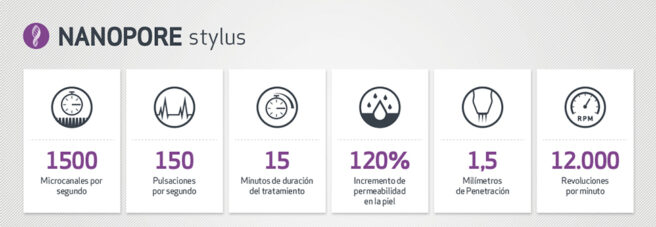
When your skin needs a real solution and not just palliatives, we enter a more aggressive phase. In our clinic, we use nanopore technology to treat chronic hyperpigmentation. This is not a conventional laser; it is microscopic holes that open on the skin’s surface to eliminate pigmented cells without damaging the sensitive upper layer.
The process in our consultation room is careful. First, we evaluate your history and the type of melanin you have, as melasma has subtypes such as epidermal, dermal, or mixed. Depending on the type, the intensity of the session varies. After the session, the skin may look red or sensitive, but this is normal and disappears quickly with proper care.
If you are looking for advanced options in Medellín, Verassere is a center that integrates these technologies to address complex cases. There, you can receive a complete analysis and personalized plans that go beyond common creams. Remember that each patient is unique, so the treatment must be adapted to your specific skin.
Concrete Signs to Know When to See a Doctor
Do not wait for the spots to turn black or painful before seeing a doctor. There are clear signs that you need professional help. If you see that the spots are spreading beyond usual areas or if they appear in areas that never had pigmentation, it is time to consult. You should also seek attention if you notice that your current medications are not working after a considerable amount of time or if the spot changes color rapidly.
It is important not to self-medicate or use products with high acid percentages without supervision, as they can cause skin lesions. A specialist can identify if there is an underlying condition such as Addison’s syndrome that sometimes confuses with melasma and requires a different approach. Early detection avoids greater problems and accelerates your recovery.
Frequently Asked Questions About Nanopore
How many nanopore sessions do I need to see results with melasma? It depends on the depth of the spot, but usually several spaced sessions are required to achieve the desired improvement without damaging the skin.
Can I use sunscreen after undergoing nanopore treatment? It is mandatory to use sunscreen all day to prevent spots from reappearing or worsening after the session.
Is nanopore painful or uncomfortable during the procedure? It is a minimally invasive procedure that generally does not cause significant pain, although there may be a sensation of mild pressure or heat.
If you have been dealing with this for months and want to know your options, schedule a consultation in Medellín: Schedule a consultation.