


What is Nanopore and Why Do Your Acne Marks Persist
There is something many patients tell us during the coffee break before starting their shift: “I’ve tried everything, but that red line left behind by a pustule doesn’t go away.” It’s not that you haven’t done anything right; it’s that skin needs different times to heal depending on what we do to it. Sometimes we apply creams or perform peels and expect miracles, but the reality is more complex. Your skin is demanding specific help to rebuild what acne destroyed.
If this happens to you, you understand that marks are not just discolorations; they are physical changes in the texture of your dermis. Acne leaves scars because it breaks the collagen and elastin network that keeps our surface firm. When that structure is damaged, skin takes a long time to return to its original shape. It is not a magical process that ends in a week with a special cream. We need tools that reorganize the deep layers of the tissue.
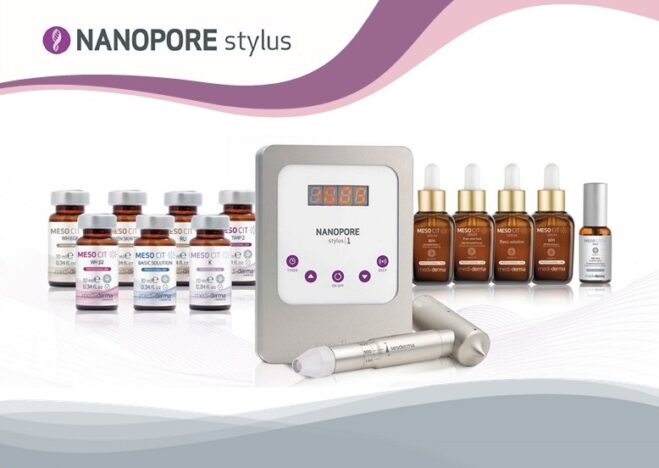
In consultation, we see that the pain of not seeing results at home is real, but there are technological solutions designed for this. People search for “what is nanopore” because they heard the name and want to know if it’s worth investing time and money. Our team explains that these devices are machines that analyze the layers of your skin with millimeter precision before applying any treatment. They are ultra-sensitive sensors that detect skin thickness, hydration, temperature, and even oxygen levels in real-time.
Why Do Your Marks Persist and What Do the Data Say?
The main reason those scars do not disappear is a mix of previous inflammation and inadequate cellular regeneration. When acne is severe, such as deep cysts, the skin suffers an inflammatory response that destroys collagen-producing cells. This leaves an empty space in the dermis that normal skin cannot fill on its own.
The honest nuance you must know is this: people believe that melasma or scars are removed by a treatment and disappear forever. The reality is that they are controlled, not gone forever. Without maintenance or if internal causes persist, marks can return. In the case of acne scars, the challenge is that the skin has a memory of that past inflammation and needs constant stimulation to rebuild.
There are concrete data points that explain why home products often fail. Studies show that superficial treatments only reach the epidermis, the top layer of 0.05 millimeters where most skin cells live. Deep scars are in the dermis, which measures between 1 and 4 millimeters in thickness. Therefore, applying salicylic acid or strong retinoids is not enough to lift a deep acne scar. We need to penetrate deeper to stimulate stem cells to work.
Another relevant medical data point is healing time. An acne scar can take between 6 and 12 months to fully stabilize if it does not receive active intervention. During this period, the extracellular matrix reorganizes slowly. If we interrupt the process prematurely or use ineffective therapies, we may allow the scar to become permanent. It is vital to understand that we are treating living, complex tissue, not paint that needs to be washed off with water.
How the Process Works at Your Consultation at Verassere
When you arrive at our clinic in Medellín, the first thing we do is evaluate with the special device to understand exactly what you need. We do not give a generic plan because every scar is unique. The technology helps us see where there is fat accumulation, where the skin is dry, or where there is a lack of movement in the muscle layer below.
What we do is combine several procedures to attack the problem from different angles. In the first instance, we use subcision, a technique where we insert a fine needle to cut the adhesive fibers that anchor the scar to the muscle beneath the skin. This releases tension and allows the skin to rise naturally.
After releasing those fibers, we apply fractional CO2 laser. This laser creates controlled micro-injuries in the damaged tissue without touching healthy areas. The skin reacts to these small lesions by generating new collagen to fill the gaps. All of this is monitored with the special sensor during the session to ensure that energy is applied exactly where regeneration is lacking.
If the skin is very sensitive or requires a gentler approach, we can use microneedling. This technique uses tiny needles to create micro-channels on the skin’s surface. By penetrating these channels, we create direct pathways for active products to reach the deep dermis where structural changes occur.
The entire process adapts to your skin and your expectations. At Verassere, we have modern equipment that guarantees precision and safety. We prioritize your comfort, as heat or vibrations during these treatments can be uncomfortable for some people. We use local anesthesia or soothing creams so the process is as gentle as possible.
When Should You See a Dermatologist in Medellín?
You should think about an appointment when you feel that the marks have become more visible as weeks pass. If you apply personal care products and see that your skin texture does not improve, it is a sign that you need professional help. The persistence of red or depressed lines that do not respond to creams indicates that the internal structure is damaged.
Another key moment to consult is when you notice changes in the color or shape of the scars. If some become darker or swell occasionally, it could be a sign that the underlying inflammation has not completely disappeared. Skin responds to many factors, but consistency is key to seeing visible results in the first months.
You should also consider a consultation if you plan to engage in activities that expose your skin to the sun or intense physical exertion. Acne scars are more visible when there are changes in the humidity or temperature of your environment. If you live in an area like Santa Marta where there is high humidity, or work in offices with extreme air conditioning, your skin may react in ways different from what you expect.
It is important not to wait until the mark becomes red or painful to act. The best time to intervene is when you notice that the texture has not changed after several months of personal care. Prevention and early treatment make the path to a more uniform and healthy skin much easier.
Frequently Asked Questions About Your Skin
What does seeing nanopore in an article about acne scars really mean? It is a technological sensor that analyzes the deep layers of your skin to design the perfect treatment. How many sessions do I need for my marks to disappear completely? Generally, between six and twelve sessions are required depending on the depth of the scar. Can I use normal creams after these treatments without risk? It is better to use products recommended by your dermatologist because your skin barrier will be more sensitive during those days.
If You Need Help, Let’s Do It Today
If what you read generated doubts, we are happy to answer them: Schedule a consultation.