


Which Laser Is Best for Sun Spots on Your Face
There is something many patients tell us during coffee breaks after work. It is that feeling of shame when you look in the mirror and see those dark, brown, or gray streaks that seem unwilling to fade, even if you use cream every day. Imagine going out into the street feeling that your skin has a map of permanent damage. This happens too frequently here in Colombia, especially when we live at the foot of a volcano or on the coast.

It is not your fault for going out to enjoy the outdoors. The sun in Medellín does not forgive, and although the climate may seem milder than in the highlands or the coast, UV radiation continues to accumulate. What bothers you today, those uncomfortable spots, are actually your skin’s response to solar damage that has been growing for years without you noticing. It is as if your body is trying to mark a territory where it has not received enough oxygen.
I perfectly understand that frustration when creams seem to do nothing or when home treatments give temporary results. What you need to know is that there is a real difference between what you can control and what needs professional attention. It is not about hiding, but about understanding what is happening beneath that layer of pigment.
Why Those Spots Appear and Are Not Just Because “You Didn’t Use Sunscreen”
The truth is that the sun is the main cause, but not everything revolves around that. Sometimes we think that if we do not get burned, the problem does not exist. The reality is different. When sunlight enters the skin, some of its invisible waves reach a cell called a melanocyte. That is where the drama begins: that cell activates and sends signals to the rest of your cells to produce more melanin, that pigment that protects us but also darkens the skin.
This generates solar spots, which are areas of hyperpigmentation caused by cumulative sun exposure. They are different from melasma, which has more to do with hormones and genetics. A key characteristic is that solar spots usually appear in the most exposed areas: cheeks, nose, and forehead. In addition, they often have irregular borders and can change color depending on the intensity of the light.
Here is the honest nuance that many people overlook. People believe that melasma goes away after one treatment and disappears forever. The reality is that the sun controls it; it does not disappear. Solar spots do have a higher probability of not returning if protected, but the skin needs time to repair itself. If you try to cure them without protection, they will return just as they were yesterday.
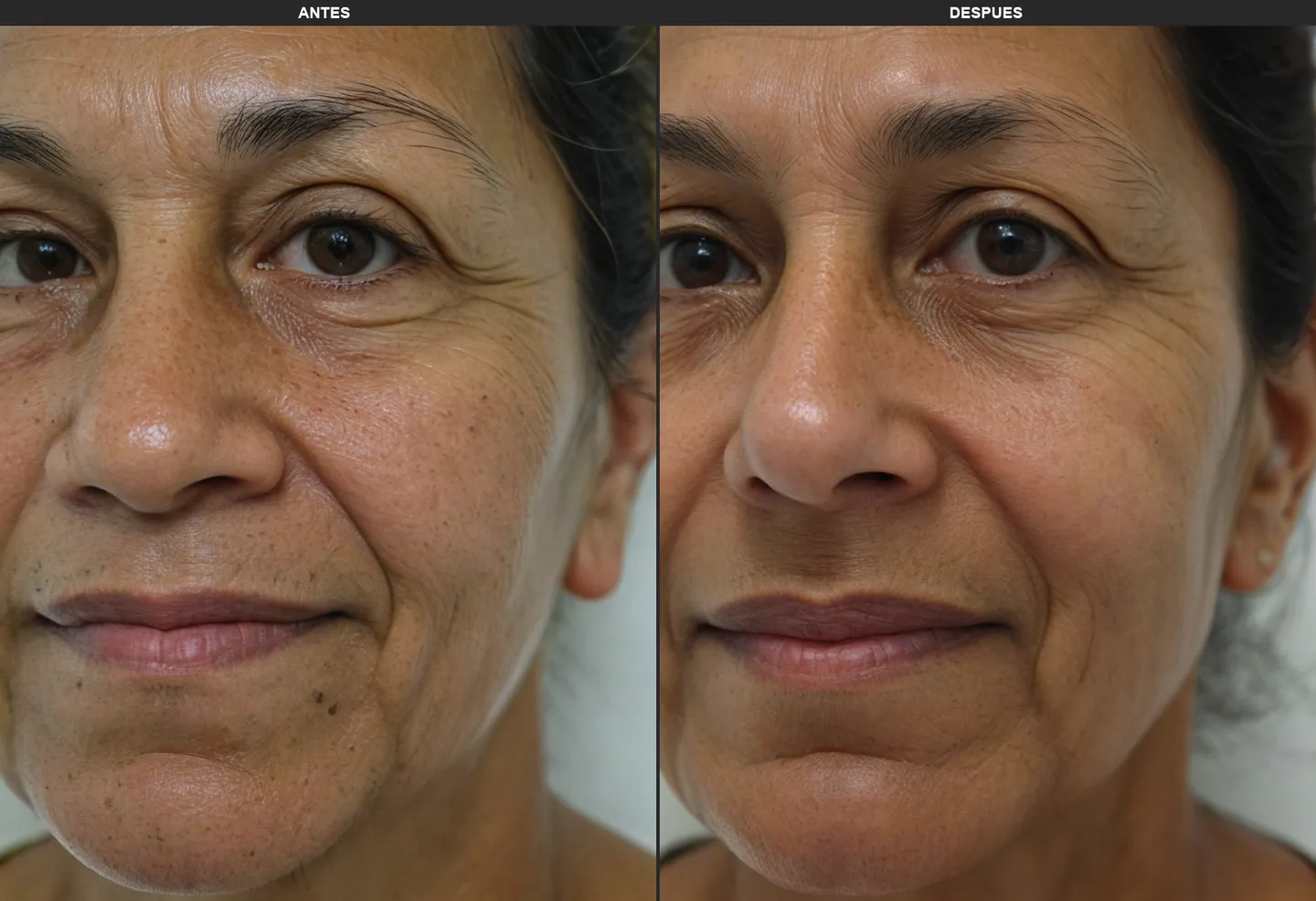
What We Do in the Consultation and Which Is the Best Treatment for You
In the consultation, we examine your skin with a magnifying glass and analyze each spot. What we do is first rule out anything more serious, such as an atypical growth that requires a biopsy. If we confirm it is simply solar pigment, then we begin discussing options to clean those areas without damaging the rest of your face.
The best laser for solar spots depends entirely on the depth of the pigment and the color of your skin. If your spots are on the surface, a pulsed laser such as Fraxel or PicoSure can be very effective. These devices use laser energy that is concentrated in very small points to break down the pigment without burning the surrounding skin.
If the spots are deeper, in the dermis, we need something more powerful. Fractional CO2 laser or Er:YAG laser are ideal because they penetrate deeper and tighten the skin while removing damaged tissue. There are also options such as IPL (intense pulsed light), which is less invasive and works well for superficial spots or vascular lesions, although it requires more sessions.
Many patients come thinking about a magic solution, but the process has nuances. At Verassere, for example, we choose the appropriate equipment according to your skin type. Not all lasers work the same way with all skin tones, and applying one incorrectly could cause burns or new spots. That is why it is vital that a specialist evaluates your case before starting any therapy.
In addition to the laser, we sometimes combine it with mild chemical peels or retinoid creams to accelerate cell renewal. The goal is not only to remove the brownness, but to restore luminosity and uniformity to your entire face. It is a process that requires patience and consistency, but the results are very satisfactory when managed well.
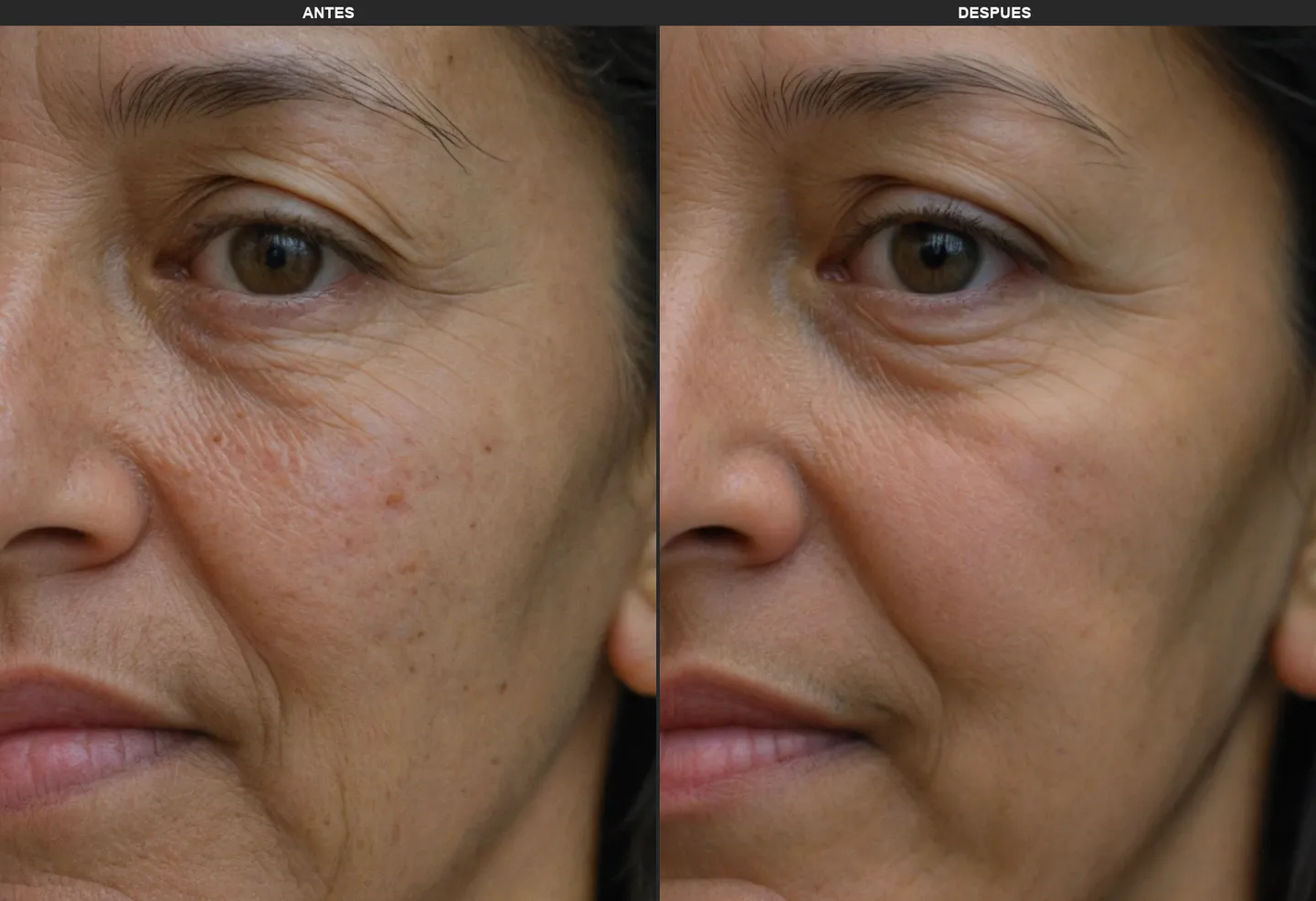
Concrete Signs to Prompt You to See a Dermatologist
If you notice that your spots have grown recently, even if you have not been in the sun much, that can be an alert signal. Also, if you see that the spots change in shape, color, or texture in the same way every day. If you have the feeling that those marks are irritating your skin or generating emotional discomfort, it is time to schedule an appointment.
Do not wait for them to become as dark as coffee. The best time to treat them is when they are lighter, in spring or summer, because the skin is active and responds better to treatments. If you see that the spots are spreading to other areas of your face, or if you feel persistent itching or redness, do not wait any longer.
Frequently Asked Questions You Are Asked Before Deciding
What is the pain of the laser for spots? It is true that there is discomfort during the treatment, like a strong pinch or a sensation of heat, but it can be managed with local anesthesia. Afterward, the skin feels like a mild sunburn and requires special care.
How long do treated spots take to disappear? Normally, the first results are seen in two weeks, when the broken pigment begins to shed. Completely, it may take from one to three months, depending on how many sessions you need.
Can I get spots again if I use sunscreen after the laser? Yes, it is very likely if you return to the sun without protection. The laser removes the pigment, but it does not remove your sensitivity to the sun or your skin’s ability to produce it if it is exposed again without care.
If you have had this for months and want to know your options, schedule a consultation in Medellín: Schedule a consultation.